


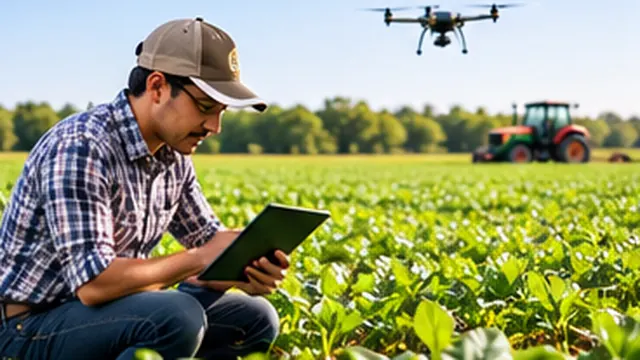
Agriculture remains a major part of India's economy and supports millions of farming households. AI-powered agriculture tools can help farmers, agribusinesses and agricultural advisers interpret field images, monitor crop health, understand weather information and organise farm operations. These tools should support local expertise rather than replace agricultural scientists or extension officers.
One practical use is crop disease and pest identification. A farmer may capture a clear photograph of a leaf or affected crop and use a crop advisory app to explore possible causes. Image-based suggestions are not a confirmed diagnosis: lighting, crop variety, growth stage and local conditions can affect results. Confirm serious problems with a qualified agriculture professional before applying pesticides or changing treatment.
Satellite imagery, drones and precision-agriculture platforms can help larger farms and producer organisations monitor crop variability, irrigation needs and field conditions. When combined with reliable soil tests and local weather data, these insights may support better planning. The value depends on image resolution, connectivity, local language support and whether the recommendation fits the farm's crop and region.
For Indian farmers, accessibility is critical. Look for mobile-first services, regional-language interfaces, offline or low-bandwidth support, transparent pricing and practical advice for local crops. Consider whether a tool supports small landholdings and whether the farmer can reach a human adviser when the situation is uncertain.
AI can also help farmer-producer organisations, input suppliers and agri businesses prepare market updates, translate advisory material and summarise public scheme information. Always verify government scheme eligibility, application dates, subsidy amounts and market prices using official sources because AI-generated summaries may be incomplete or outdated.
Start with one measurable problem, such as identifying a crop issue earlier, planning irrigation or organising field records. Run a small pilot, compare recommendations with field observations and record the outcome across a crop cycle. Responsible AI adoption in Indian agriculture should be affordable, locally relevant and backed by trusted agronomic guidance.
What farmers and agri-businesses can achieve
- Identify possible crop disease and pest symptoms earlier by reviewing field photographs with Plantix. Treat image results as preliminary guidance and confirm serious cases with a local agriculture expert.
- Monitor crop health and field conditions using farm-management platforms such as Cropin, alongside satellite, weather and soil information where available.
- Prepare multilingual farmer advisories and summarise crop-management material with ChatGPT, then verify recommendations against local agricultural guidance.
- Compare seed, input and crop-management information using source-linked research in Perplexity.
- Organise field observations, sowing dates, irrigation records and harvest notes to compare outcomes across seasons.
- Use AI insights to support irrigation timing, pest monitoring, input planning and crop logistics; do not allow an unverified chatbot to prescribe chemicals or replace agronomists.